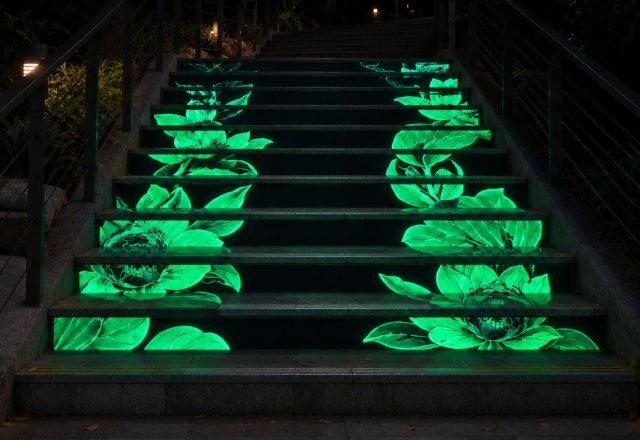
CP-3466 Fine Sand Photoluminescent Aluminium Foil Sticker for Floor Markings and Escape Routes


Overview
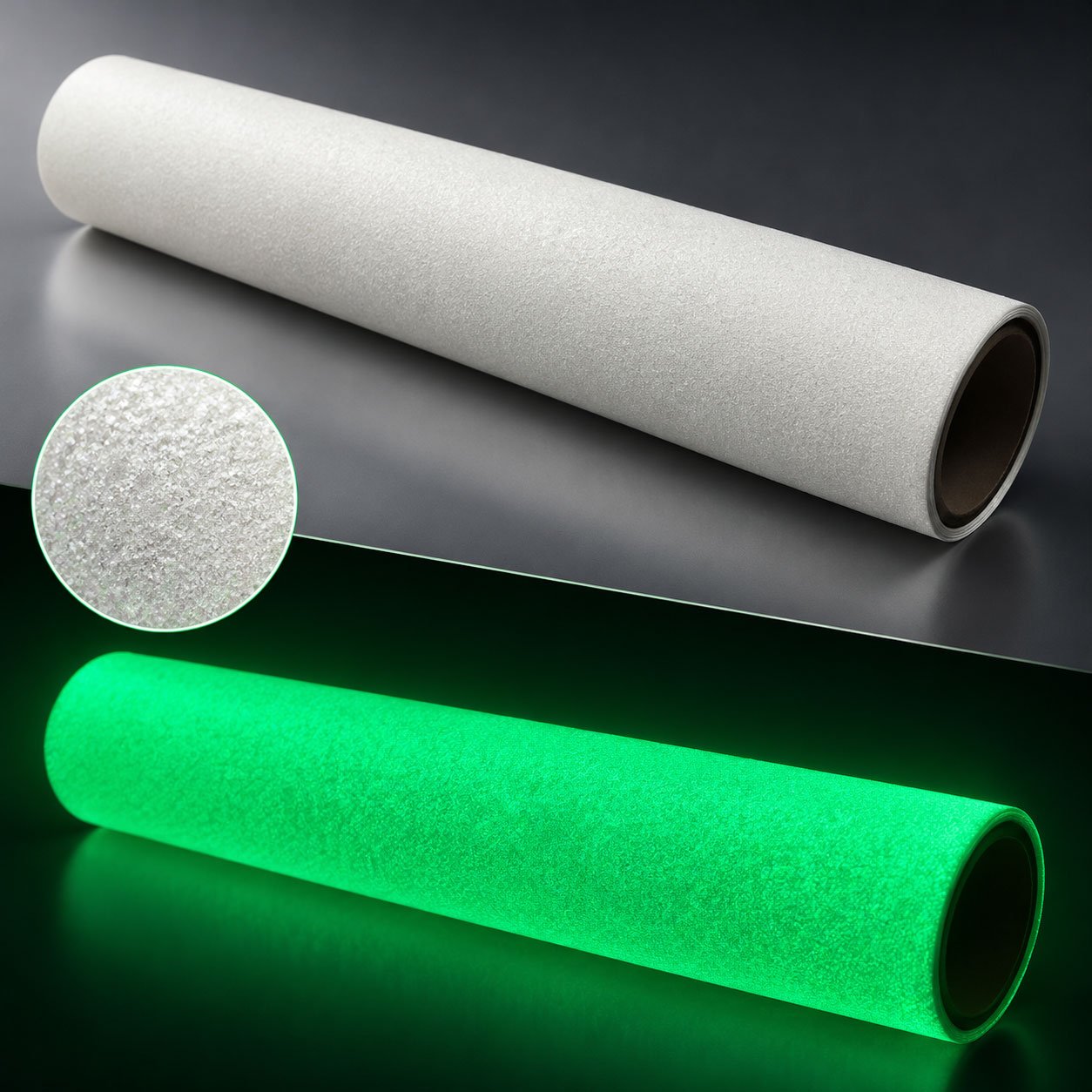
CP-3466 is the fine sand grade of the photoluminescent aluminium foil range. Same luminous pigment system as its coarse counterpart, same rolled foil body, same adhesive. What differs is that the grain is fine enough to leave the surface visually quiet, which is what makes this the grade for marking that has to be read rather than noticed.
Directional graphics and applied numerals lose their edges on an open grit. The particles sit proud of the coating and scatter the edge of anything printed or cut on top, so the outline softens. On this grade the face stays close to flat, a cut arrow keeps its point and a printed number keeps its counter open.
The luminous behaviour is the same as the coarse grade. The film stores the light that falls on it and releases it slowly, glowing yellow-green and reading as a bright green once the light goes. Give it a full charge and it holds a legible glow for around six hours.
Reading a fine surface
A surface that stays quiet by day is also a surface that returns less light at night, because there is less standing relief to catch the eye. If the marking has to be unmistakable in an unlit space, the coarse grade gives more back. If it has to look like part of the floor and read as a line, this is the one.
The charge condition still governs the result. Under a lit passage or a daylight opening the film performs as published; in an unlit interior the ceiling lighting sets the result, and that needs checking before the grade is fixed.
Specifications
| Item | Specification |
|---|---|
| SKU | CP-3466 |
| Product name | Fine sand photoluminescent aluminium foil sticker |
| Product category | Photoluminescent foil floor sticker / foil decorative film |
| Total thickness | 470+ µm |
| Layer structure | Fine sand photoluminescent functional coating + rolled aluminium foil + transparent pressure-sensitive adhesive + 140 g double-PE liner |
| Standard size | 1.27 m × 30 m |
| Adhesive supply | High-tack removable transparent pressure-sensitive adhesive |
| Core inner diameter | 25.4 mm (1 in) / 76.2 mm (3 in) |
| Surface character | Fine dense sand texture, sharp marking definition, glowing green in the dark |
| Colour | Aluminium foil natural (silver white), glowing yellow-green in the dark |
Applications
| Application site | What it is asked to do | Why this film fits |
|---|---|---|
| Floor indication and route marking | Keep the outline of the graphic readable | The fine face lies flat, so cut lines and printed edges stay sharp |
| Evacuation stairs and escape routes | Mark step and landing edges when the lighting is off or obscured | Holds a legible glow for about six hours after a full charge |
| Interior showrooms and exhibition scenery | Sit quietly by day and still be found at night | The luminous material sits inside the sand coat, so the film does not stand out in daylight |
| Night wayfinding, door heads, landscape lighting | Work as a graphic by day and a sign by night | One material carries both readings |
| Transport hubs, metro concourses, airport waiting areas | Hold grip under constant foot traffic | R13 applies in both dry and wet conditions |
Choosing Between the Two Photoluminescent Models
The two glow grades share the same luminous system, the same foil, the same adhesive and the same afterglow figure. The only difference is the grain.
| Model | Total thickness | Surface | Pick it when |
|---|---|---|---|
| CP-3465 | 530+ µm | Coarse sand | Night visibility and wear resistance come first — warning zones, heavy traffic |
| CP-3466 | 470+ µm | Fine sand | The surface should stay visually quiet and the marking stay sharp |
Which one to specify
Because the glow performance is identical, there is no trade-off to make about afterglow duration. The decision comes down to what the grain does for you in daylight and after dark.
Coarse grain throws back more light at night and takes more scuffing, which suits warning blocks, evacuation routes and any outdoor zone where grit lands on the floor. Fine grain lies flatter, so it suits directional markings and interior work where the graphic has to read clearly and the surface should not announce itself.