☎ +86 13392540241 ✉ sale@labellet.com 🕒 26 yrs label experience  ·  ISO 9001 CERTIFIED

CUSTOM LABELS · MATERIAL, STRUCTURE, PROCESS AND PERFORMANCE

Custom Labels Matched to Your Product, Surface and Service Conditions

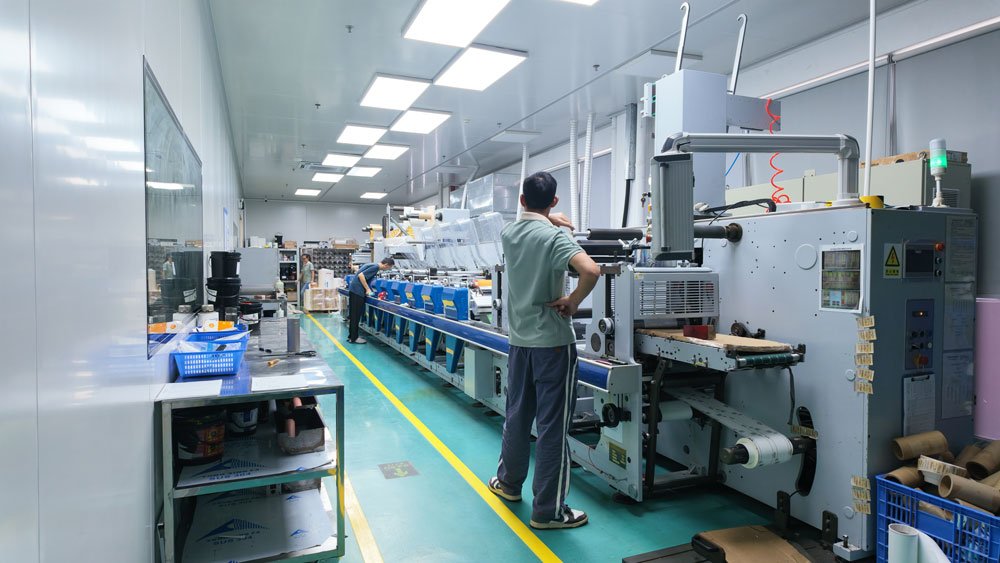
Labellet makes custom labels and custom waterproof labels on its own lines, from adhesive coating and printing through die-cutting, inline inspection and packing. Face-stock, adhesive, print route and finish are set together, then tested in a 128-item laboratory before production. We are a leading label manufacture in China.

6 in-house production steps5 print routes128 lab test items11 application sectors

Labellet – Custom Labels In China, Engineered for Your Products

Custom waterproof labels are not generic stock products with custom printing applied. They are engineered as a system for your specific application, substrate and environment. Labellet manufactures custom labels in China with OEM and ODM options, allowing you to specify every element or have our engineering team design a complete solution.

We serve customers across diverse industries—from food packaging and personal care to electronics, pharmaceuticals and logistics. Our expertise spans anti-counterfeit solutions, RFID smart labels, decorative applications and specialized environments. See our 11 Application Solutions for detailed examples across different sectors.

  • OEM: You define the specification. We produce custom labels to your confirmed sample.
  • ODM: We engineer the custom label structure and process route. You approve it before production starts.
  • In-house control: All six production steps for custom label manufacturing run on our own lines, each with its own equipment and in-process test points.

Structure, process and performance are fixed in one design version. Samples and mass production come from the same custom label specification, so an approved sample represents a production-ready label.

OEM & ODM Custom Label

APPLICATION SOLUTIONS

Custom Waterproof Labels for Eleven Industries

Each sector needs a custom label matched to its substrate, service conditions and equipment. Our engineers match the label structure, material and finish to exactly what you need.

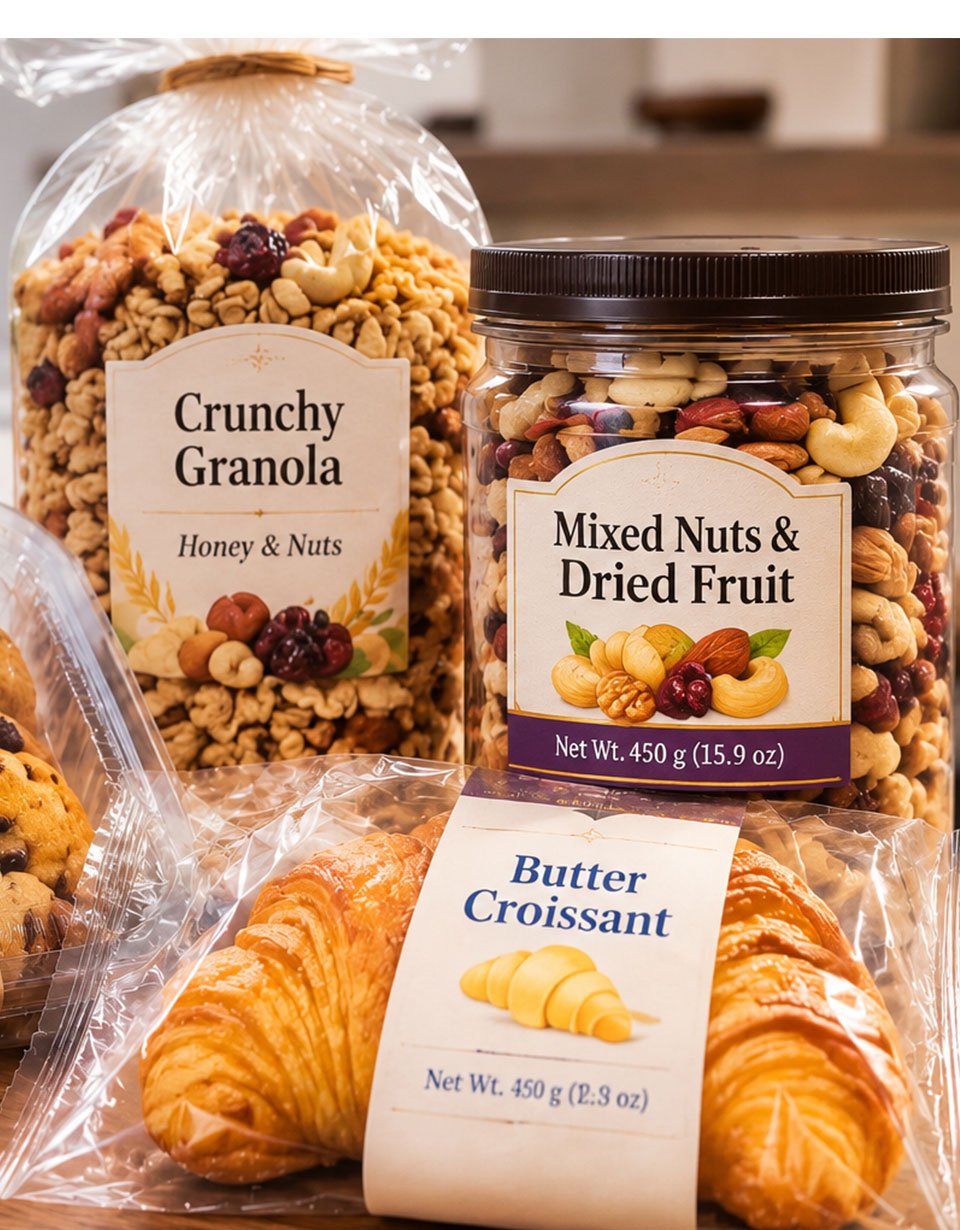
Custom waterproof labels for food and beverage packaging

S01Custom waterproof labels for food and beverage packaging

Food and beverage labels for metal cans, bottles, cartons and chilled shelves. The face and adhesive are matched to the container surface and the storage condition.

  • Metal cans: BOPP film with water-resistant pressure-sensitive adhesive, 60 to 80 μm.
  • Curved glass bottles: BOPP or PE film with clear permanent adhesive, 60 to 80 μm.
  • Ambient paper cartons and bags: coated or matt paper with water-based adhesive, 80 to 120 μm.
  • Chilled shelves and display: synthetic paper with moisture-resistant adhesive, 90 to 120 μm.
  • Barcode and QR code zones keep a clear quiet zone. Hot foil, spot UV and lamination are placed in separate zones from the codes.
  • Bottle labels are matched to the modulus of the shrink film and the bottle curvature.
  • Food-contact compliance: we submit the samples and supply reports (GB 4806 and FDA 21 CFR 170 to 199). Whole-product migration depends on the actual contents and contact conditions, and we supply matching samples and parameters for that test.
Custom labels for cosmetics and personal care

S02Custom labels for cosmetics and personal care

Labels for shampoo, shower gel, creams and serums. The label must stay clear and attached through humidity, alcohol wiping and display time.

  • Shampoo and shower gel bottles (high humidity): PET film or synthetic paper with water and oil resistant adhesive, 50 to 70 μm.
  • Jars for cream and serum: matt or fine-grain label with clear permanent adhesive, 60 to 90 μm.
  • Soft-touch film with hot foil or spot UV for premium lines, 60 to 100 μm.
  • Alcohol-wipe resistance grade is set and the report ships with the goods.
  • Matt, soft-touch and spot UV effects are combined on one label. Embossing is aligned to the cap and lid positions.
  • Alcohol, abrasion and humid-heat data are supplied. Colour retention over a display period of several months is documented.
Pharmaceutical and healthcare labels

S03Pharmaceutical and healthcare labels

Labels for medicine bottles, cartons and medical device packaging. Batch, expiry and traceability data are printed on every label.

  • Drug bottles (refrigerated and ambient): film with alcohol and water resistant adhesive, 50 to 70 μm.
  • Drug cartons and insert covers: synthetic paper with water-based adhesive, 90 to 130 μm.
  • Medical device packaging: PET film with acrylic permanent adhesive, 50 to 80 μm.
  • High-precision barcode and 2D code printing, with variable data for batch, expiry, ingredients and traceability codes, each unique to its label.
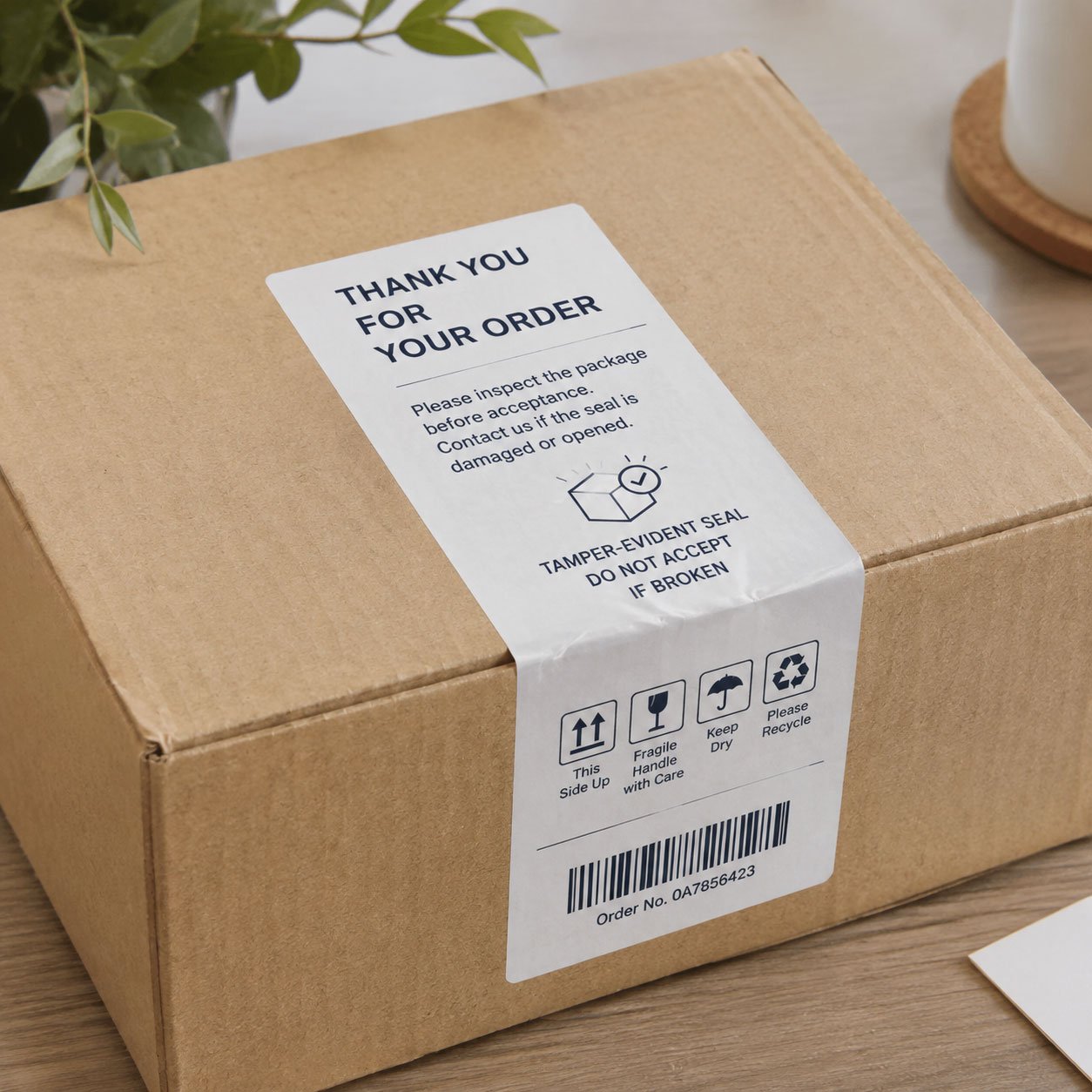
  • Tamper-evident features are available for pack integrity.
  • Every label carries both human-readable information and a machine-readable code. Code type, position and print precision are fixed in one structure design.
  • Code files are supplied by the customer or generated by us, output in the customer system fields, and the interface is tested once. Every code is checked before shipment, and rejects are logged.
Battery and electronics labels

S04Battery and electronics labels

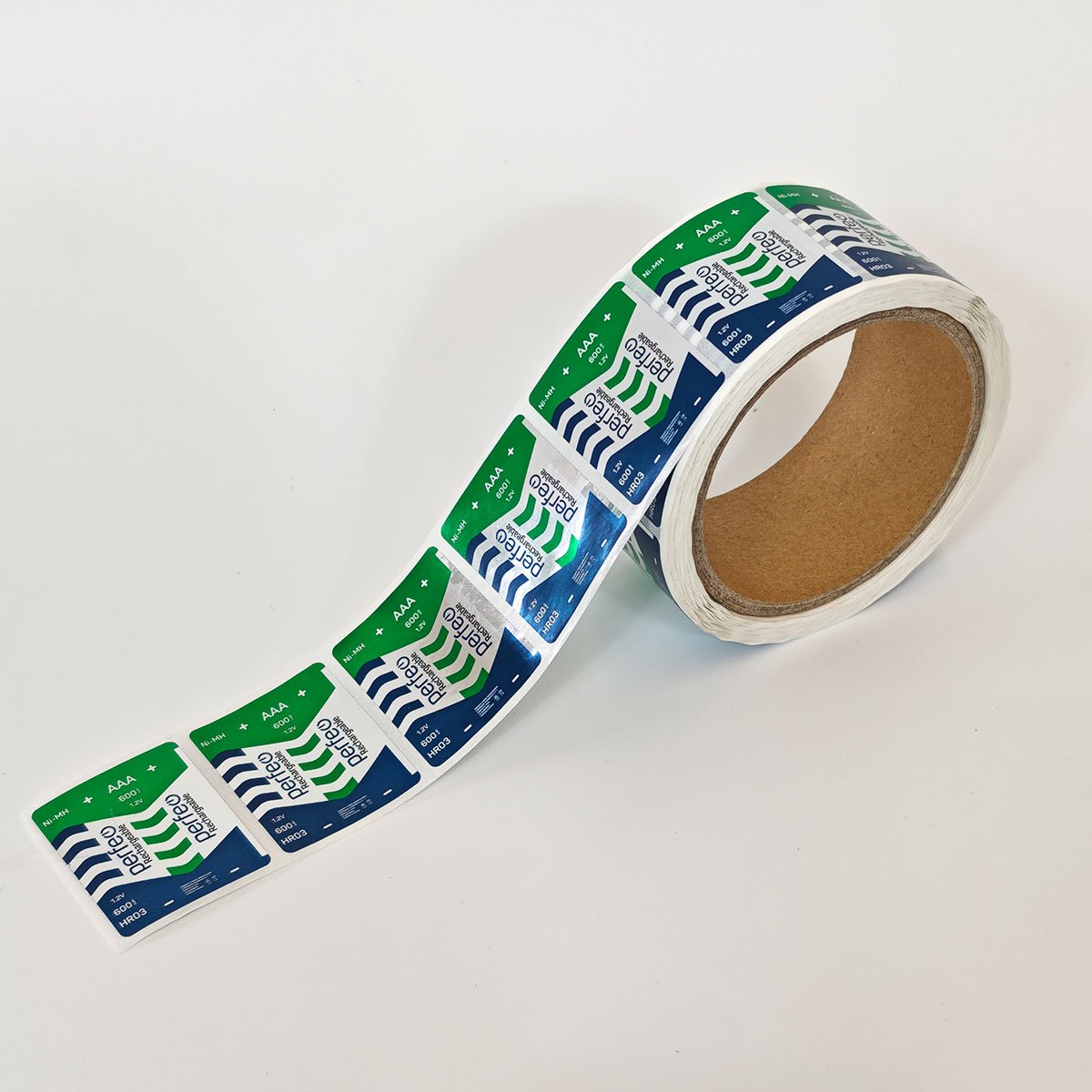
Labels for battery packs, cells and PCB components. Flame retardancy, insulation and heat resistance are set by the application zone.

  • Battery pack and modules: PI film, fluoropolymer or aluminium foil composite with permanent adhesive, 60 to 100 μm.
  • Cells and battery bays: aluminium foil composite with chemical-resistant adhesive, 100 to 300 μm.
  • PCBs and components: film with anti-static pressure-sensitive adhesive, 30 to 60 μm.
  • Flame retardancy is set to B1 under GB 8624. Anti-static and insulation grades are set per application.
  • Solvent resistance and ink migration are controlled. Barcodes and QR codes are placed clear of the heat zones.
  • Deliverables: a selection table matching temperature range and flame grade, insulation and heat test data, and UN 38.3 battery transport testing.
RFID smart labels

S05RFID smart labels

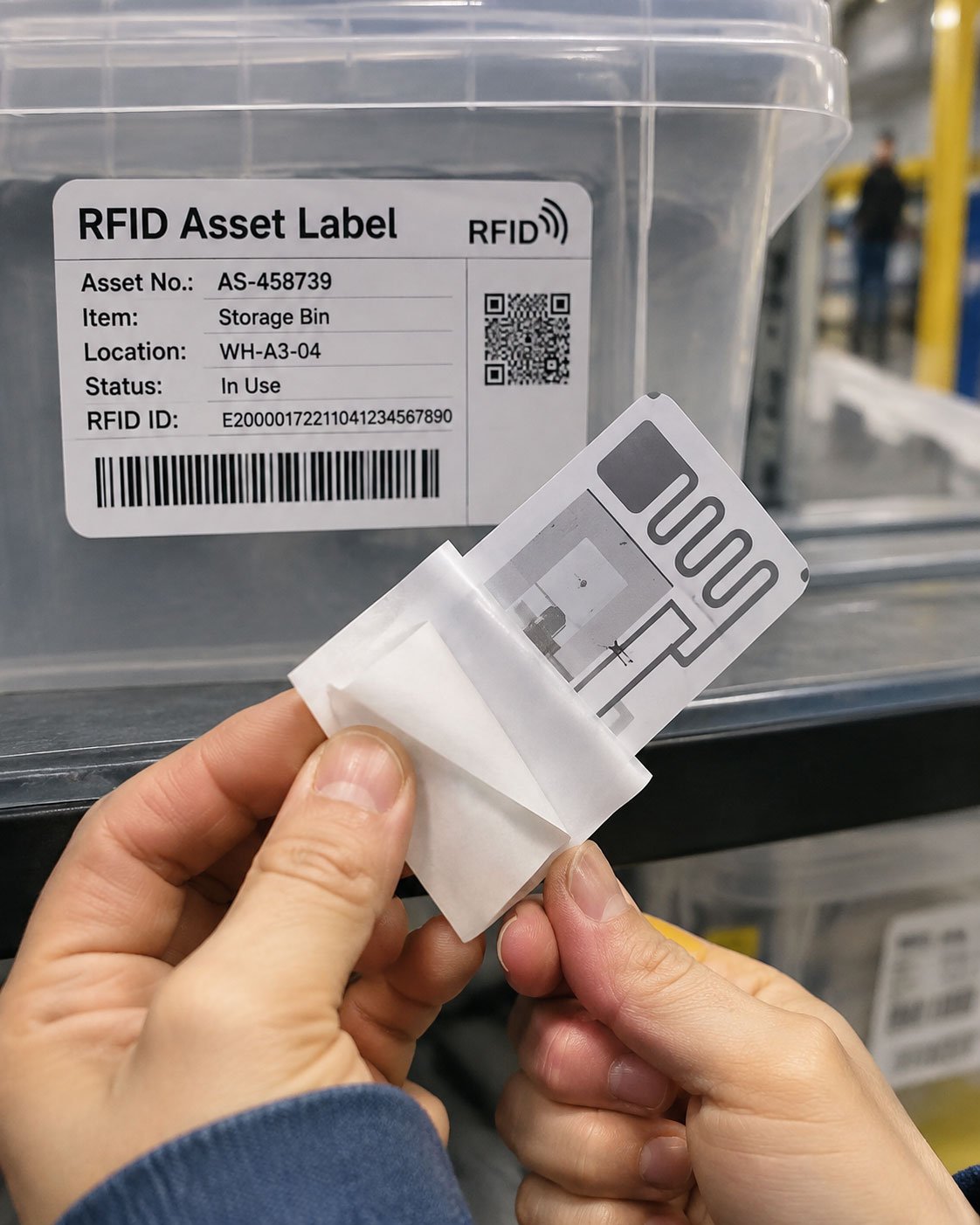
RFID labels for membership cards, drug traceability, warehouse location and asset counting. Frequency and antenna are selected to match the reader and the surface.

  • HF 13.56 MHz (near-field): membership cards, drug traceability and in-store anti-theft.
  • UHF 860 to 960 MHz (read range over 3 m): batch reading in warehouses, vehicle management and asset counting.
  • Chips are supplied to the customer model, or selected to EPC Gen2 or ISO 18000-6C.
  • Antennas: dipole, cross-dipole, loop or near-field coupling. The antenna is matched to the dielectric constant of the substrate.
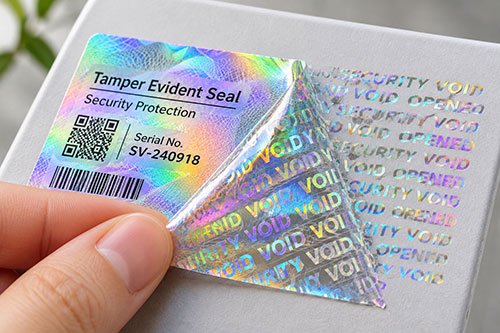
  • Packages: moisture-sensitive or breathable package, tamper-evident paper with VOID, or standard composite.
  • Visible area and chip area are printed in the same layout. EPC code and serial number form a two-layer data structure. Code writing and visible printing run in parallel and are delivered together.
  • Read and write distances are measured at the proof stage with your reader, mounting position and substrate. The output is a power-to-read-distance curve and a recommended power range, so the reader power does not need adjusting after launch.
  • Code lists are exported in your WMS fields for direct system integration.
Custom labels for e-commerce logistics and warehousing

S06Custom labels for e-commerce logistics and warehousing

Waybill, shelf, box and location labels for fulfilment lines. Rolls and die-cut parts are built to the applicator, not to a generic core.

  • Courier waybills: thermal paper with high-tack pressure-sensitive adhesive, on a 76.2 mm core.
  • Warehouse shelf labels: synthetic paper with abrasion-resistant adhesive, slit to 280 mm.
  • Logistics box marking: synthetic paper with water and oil resistant adhesive, slit to 280 mm.
  • Location tags: synthetic paper with UHF chip, slit to 280 mm.
  • Variable data printing for serial numbers, barcodes, QR codes and production dates.
  • Core inside diameter of 76.2 mm (3 inch) or 25.4 mm (1 inch). Roll length and outer diameter are set to the equipment reel.
  • Die-cut locating holes and registration marks are placed to the equipment. Tape speed is matched to the high-speed applicator.
  • Deliverables: an applicator parameter sheet, a variable data verification process, barcode read-rate statistics, and an RFID location coding scheme.
Industrial equipment and anti-counterfeit traceability labels

S07Industrial equipment and anti-counterfeit traceability labels

Labels for chemical drums, pipes, outdoor asset nameplates and genuine-product verification. Each label is designed for its medium and weather exposure.

  • Chemical drums and pipes: PP synthetic film or aluminium foil composite with chemical-resistant adhesive.
  • Outdoor asset nameplates: weather-resistant label with UV-resistant face and high-tack permanent adhesive.
  • Product anti-counterfeit: synthetic paper or film with an anti-counterfeit layer.
  • Anti-counterfeit methods: thermochromic, photochromic, holographic, one item one code (unique QR code checked on a platform), and VOID tamper-evident text.
  • Content is printed from your GHS classification artwork or asset-number artwork. Medium and weather resistance are set to the service condition.
  • Anti-counterfeit design and visual features are finalised in one design version. Underprint, micro-text and code positions are fixed before proof sign-off, so no redesign is needed after the production run starts.
  • Verification entry, lookup and exception handling are tested before launch.
  • Deliverables: a service condition sheet (medium, temperature range, adhesion period), anti-counterfeit method samples, and medium and weather test data.
Apparel, footwear, bag and toy labels

S08Apparel, footwear, bag and toy labels

Care labels, footwear labels, bag labels and decorative toy labels. Designs are made once and printed once across a product line.

  • Garment care labels: synthetic paper with wash-resistant adhesive, 80 to 120 μm.
  • Footwear labels: soft-rubber tag or synthetic film label, made to each piece.
  • Bag labels: synthetic film with abrasion-resistant pressure-sensitive adhesive, 60 to 90 μm.
  • Toy decorative labels: synthetic paper or film with profile die-cutting, 60 to 100 μm.
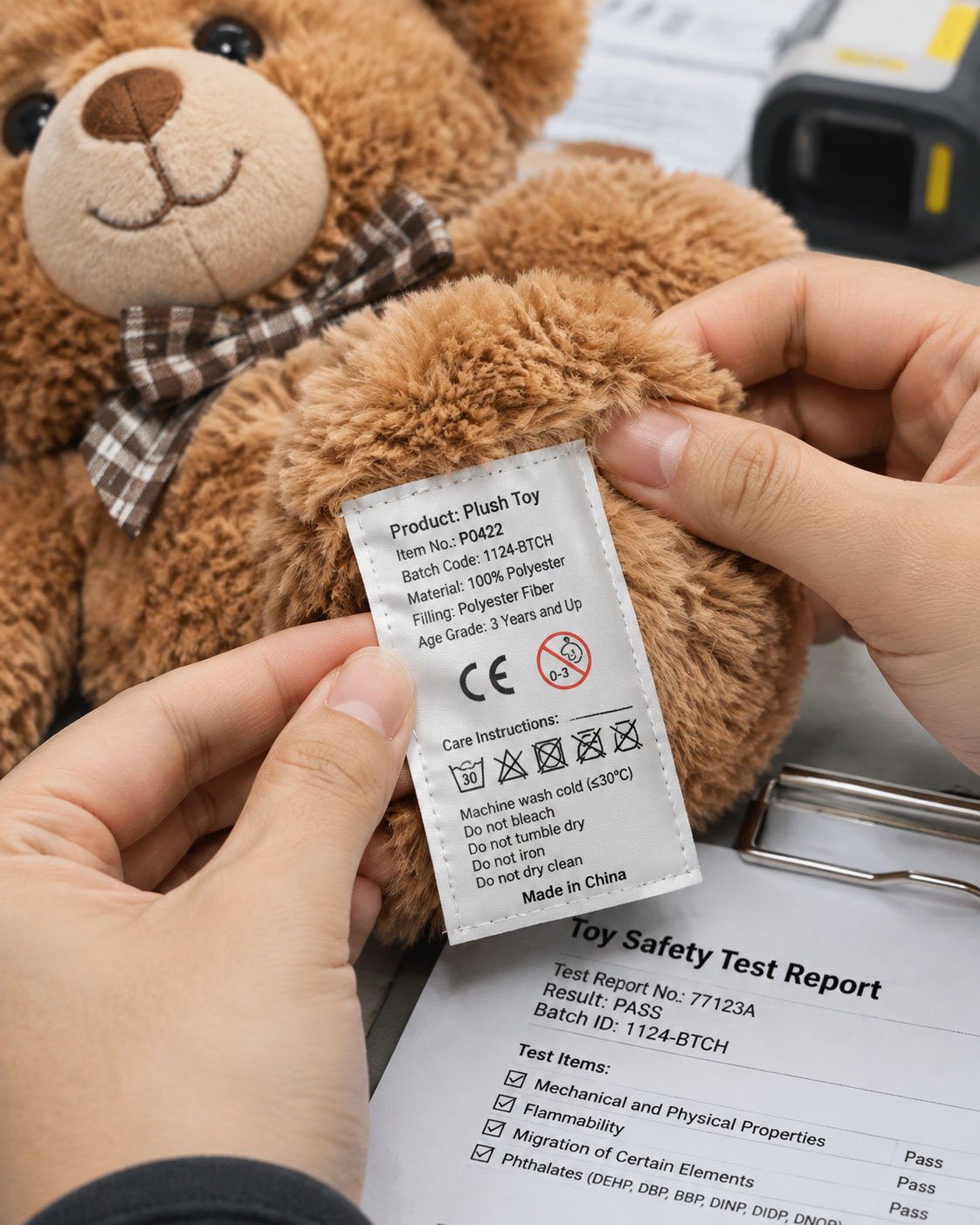
  • Care text stays legible after 30 wash cycles, confirmed by wash durability tests.
  • Removable labels are designed for a gentle peel angle of 45° or less.
  • Luminous, fluorescent and tactile inks are available. Profile die-cutting and multi-colour printing are done in our factory.
  • Care labels, hang tags and size labels can be combined in one layout, designed once, colour-matched once and printed once, so the customer manages one file.
Custom labels for wine, spirits and gift packaging

S09Custom labels for wine, spirits and gift packaging

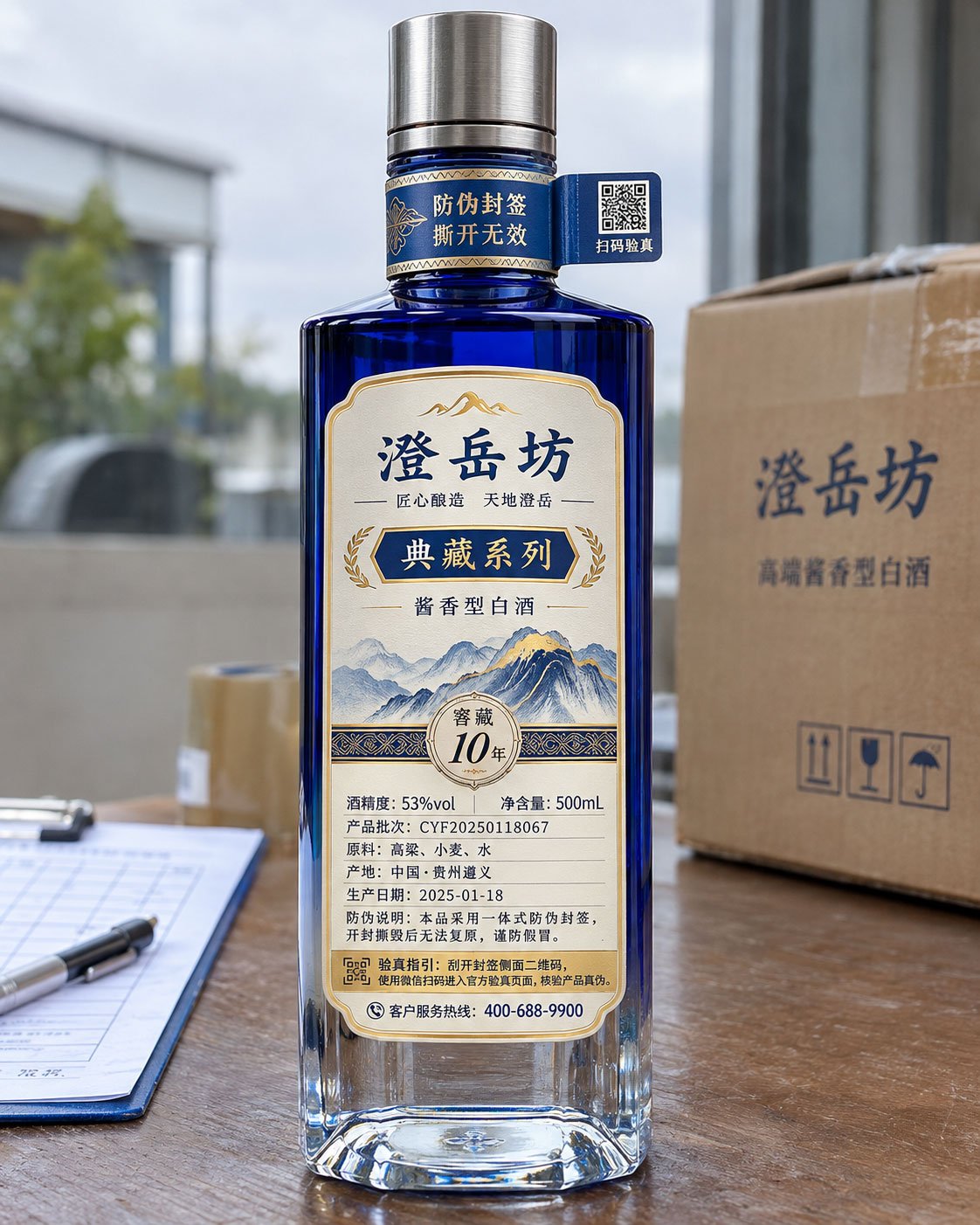
Bottle labels, gift box labels and genuine-product labels for premium spirits. Structure and anti-counterfeit features are set in the same design.

  • Glass and profiled bottles: BOPP or PET film with clear permanent adhesive, 60 to 90 μm.
  • Gift boxes and carry bags: specialty or touch-feel paper with water-based adhesive, 100 to 160 μm.
  • Spirits anti-counterfeit label: synthetic paper with an anti-counterfeit layer, 90 to 120 μm.
  • Anti-counterfeit options include thermochromic, holographic and one item one code.
  • Hot foil, embossing and spot UV are combined with foil and emboss zones placed apart.
  • Wine labels can be combined with RFID for channel flow management.
  • One bottle shape can cover several wines. The die and structure stay the same, and only the print artwork changes, so no new tooling and no new fit validation is needed.
  • Deliverables: a bottle attachment plan, an anti-counterfeit combination recommendation, and low-temperature storage and alcohol resistance test data.
Beauty devices and personal care appliance labels

S10Beauty devices and personal care appliance labels

Labels for heating parts, battery bays and housings of beauty devices and personal care appliances. Insulation and heat resistance are verified on each model.

  • Temperature control and heating parts: PI film or aluminium foil composite, 50 to 80 μm.
  • Battery bay and power area: PI film with insulating pressure-sensitive adhesive, 50 to 80 μm.
  • Housings: UV-resistant film, 40 to 70 μm.
  • Small-batch trial production and proof validation are available. The digital route serves sample runs for different models.
  • Heat ageing, insulation and chemical resistance tests are combined for each model.
  • Insulating and functional layers are zoned on the label.
  • New models can be reviewed internally from digital proofs, and mass production starts after approval. Models that share a structure use one specification.
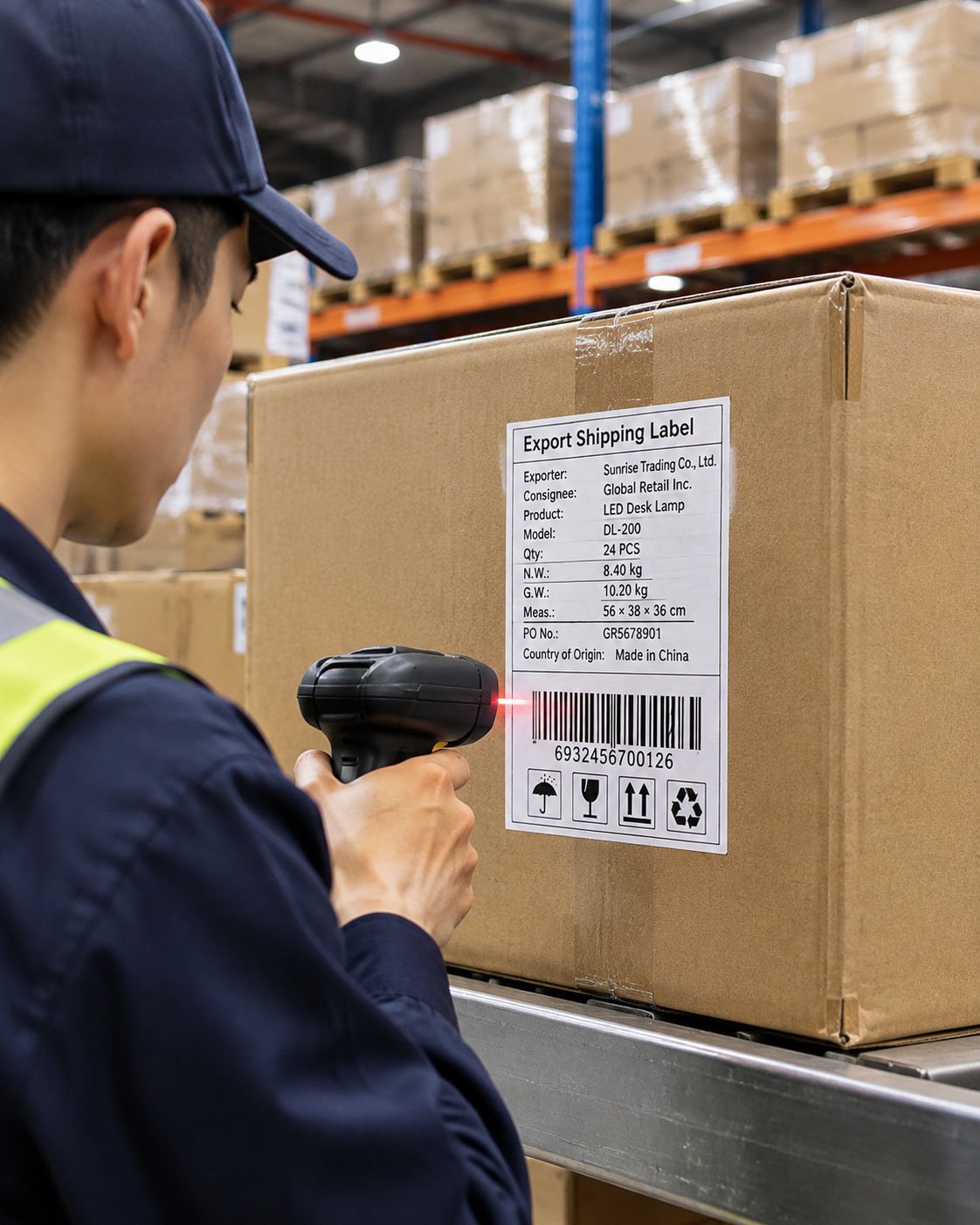
Export and cross-border logistics labels

S11Export and cross-border logistics labels

Export carton labels, multilingual labels and whole-carton electronic labels for long sea freight and multi-country shipping.

  • Export cartons: weather-resistant synthetic paper or film with water and oil resistant adhesive, 90 to 130 μm.
  • Multilingual labels: weather-resistant synthetic paper with water and oil resistant adhesive, 90 to 130 μm.
  • Whole-carton electronic labels: synthetic paper with UHF chip, slit to 280 mm.
  • Barcodes follow the GS1 format, with a clear read zone kept free of print.
  • Humid-heat and salt-spray resistance are set for long sea freight conditions.
  • Multilingual content is typeset and proofed once at pre-press. Languages added later use the same layout and registration.
  • Origin, composition, warning text and HS codes are printed from your artwork. The GS1 prefix is supplied by the customer, and each barcode is read and confirmed before shipment.

SIX IN-HOUSE PRODUCTION STEPS

From Adhesive Coating to Packing, on Our Own Lines

Every custom label passes through the same six steps. Each step has individual equipment and a process checkpoint, and the settings from one step carry into the next.

Production Equipment
01

Adhesive coating

Pressure-sensitive layer applied on our own coating line

  • Adhesive chemistry is selected for the structure. Initial tack, holding power and removability are balanced in-house and checked batch by batch.
  • Coating weight and uniformity are set on the line and checked at every batch.
  • The adhesive layer is commissioned together with printing and die-cut waste removal on the same line.
02

Printing

Five main print routes, combined printing and variable data

  • Flexo for high-volume continuous roll orders.
  • Offset for medium to large runs that need high colour fidelity on packaging labels.
  • Rotary for very long single rolls printed at high speed.
  • Screen printing for wide-gamut colour and special inks.
  • Digital for short runs and a unique data set on every label. Combined printing applies two or more methods to one label.
03

Surface finishing and decoration

Decoration units fitted to the printing and die-cutting lines

  • Cold foil, hot foil, embossing, raised texture, gloss varnish, matt varnish, silicone oil, spot UV, frosted oil and lamination.
  • Several decoration steps run in sequence on one line, so a label is not handled between separate operations.
  • Lamination is applied after printing on a matching laminator, and the interlayer adhesion is checked under the same quality system.
04

Die-cutting and slitting

Six high-speed die-cutters and our label slitter

  • Six high-speed die-cutters cover round-blade, flat-blade, double-blade and profile cutting. Some units combine foil, varnish and die-cutting in one pass.
  • The widest die-cutter takes a 350 mm web.
  • Die-cut accuracy, edge quality and waste removal are checked on every run.
  • Our label slitter cuts narrow webs at 280 mm width.
05

Online inspection

Image-based inspection on the printing and slitting lines

  • A Daheng high-speed inspection machine (300 mm) and five semi-automatic inspection machines (300 mm) check print quality by image, on line.
  • An automatic sheet cutter (600 mm) converts rolls into sheets.
06

Packing and dispatch

Packed to your specification, with traceability attached

  • Packed in the carton, roll label, barcode, pallet and shipping mark format you specify.
  • Every shipment carries a batch number and traceability record.
  • Goods ship from the Shenzhen or Zhuhai port.

PRINT ROUTES

Five Print Routes, Plus Combined Printing and Variable Data

The print route follows order size and artwork. Flexo and offset suit long, standardized runs. Digital suits short runs and unique data. Screen covers special inks. Combined printing applies two or more methods to one label.

Print RouteEquipmentMaximum Web WidthColoursBest For
DigitalHP Indigo 6K digital press320 mmCMYK, plus white, silver, orange, violet and green spot inksShort runs, unique data on each label, fast proofing
OffsetPS plate offset press, 9-colour and 7-colour320 mm9 or 7 coloursMedium to large runs, high colour fidelity on packaging labels
FlexoFlexo press, 10-colour350 mm10 coloursHigh-volume continuous roll orders
RotarySatellite full-rotary press, 12+2 colours, or 7 colours plus varnish260 mmUp to 12+2 colours, or 7 colours plus varnishVery long single rolls printed at high speed
ScreenScreen press, single colour with UV240 mmSingle colourWide-gamut colour and special inks

The digital route also runs One-Shot Color single-transfer registration, AAA 2.0 defect detection and Spot Master spot-colour calibration.

FOUR-STAGE QUALITY CONTROL

Four Inspection Stages From Incoming Material to Dispatch

Incoming, in-process, final and outgoing inspection each follow their own checklist, judgement criteria, responsible person and records. Every batch can be traced back to its material, process and tests.

Incoming inspection (IQC)

Each lot of face-stock and liner is checked. Surface condition, adhesive coating uniformity and liner flatness are inspected visually and with a magnifier. Face-stock thickness, grammage, tensile strength and elongation at break are measured. Restricted elements are analysed on an EDX 3000C X-ray fluorescence spectrometer. Initial tack, holding power and peel strength are tested per lot. Accepted lots are stored and labelled with full batch data.

In-process inspection (IPQC)

Coating weight, uniformity and drying are monitored on the coating line. Colour consistency is checked online with a colourimeter, keeping the colour difference (ΔE) within the customer tolerance. The digital vision system records ink misses, missing prints and misregistration. Die-cut accuracy and edge quality are checked during die-cutting. Slit width, roll tightness and edge quality are checked during slitting.

Final inspection (FQC)

Finished rolls are checked by manual visual inspection and digital vision inspection for colour, text, graphics, registration and defects. A colourimeter measures colour difference between batches. Samples are retested for adhesion, temperature resistance, humidity resistance and ageing. Die-cut size, slit width, roll outer diameter, batch number, production date and trace code are confirmed.

Outgoing inspection (OQC)

Before shipment, each batch is issued an outgoing inspection report and a certificate of conformity. A material certificate is provided on request. Batch number and traceability records travel with every shipment.

128 test items in our laboratory

Testing covers five areas: composition analysis, mechanical performance, optical performance, weathering and abrasion. The equipment includes:

  • EDX 3000C energy-dispersive X-ray fluorescence spectrometer for composition analysis
  • Single-column computer-controlled electronic tensile tester for mechanical properties
  • BL-6010B holding power tester for pressure-sensitive tape
  • Inclined ball tack tester for initial tack
  • ZJ-339 rubber alcohol abrasion tester for abrasion and alcohol resistance
  • TH-110 desktop haze meter for optical properties
  • Programmable constant temperature and humidity chamber for environmental ageing
  • High-resolution microscope and ageing test equipment

Management systems and certifications

  • ISO 9001 quality management system
  • ISO 14001 environmental management system
  • ISO 45001 occupational health and safety management system
  • FSC-COC chain of custody certificate, RINA-COC-004122
  • Disney FAMA authorization
  • Human rights certificate
  • National high-tech enterprise, and provincial and municipal "specialized and sophisticated" SME recognition
  • More than 50 invention patents
  • Third-party testing by SGS, with products meeting JIS and GB standard requirements

WHY LABELLET

Why Choose Labellet for Custom Labels

Our capability comes from producing and testing in-house. The points below affect a custom label's cost, lead time and performance most.

Structure, process and performance set together

Face-stock modulus, bottle curvature, adhesive balance, barcode zone, die-cut waste and decoration zones are fixed in one design version. Samples and production runs come from the same specification, so an approved sample is a production-ready label.

Adhesive formulated in-house

Adhesive and functional coatings are applied on our own line. Coating weight, uniformity and drying are set in-house. Initial tack, holding power and removability are balanced and checked batch by batch, so customers do not need to run their own trial adhesion.

Five print routes and combined printing

Flexo, offset, rotary, screen and digital cover different order sizes and artwork. Combined printing and variable data can be applied to one label in the same production run.

Labellet Manufacturing Facility

Decoration on the same line

Cold foil, hot foil, varnish, spot UV, frosted oil and lamination run in series on the printing and die-cutting lines. Compatibility of each combination is checked at proofing, so foiling, embossing and lamination can be ordered as one job.

Image-based inspection across the full web

Inline and semi-automatic inspection machines check the full print width. Our advanced systems add defect detection and registration control. Process data is stored, so a defect can be traced to a batch and a process step.

Dies that stay with the customer

Dies made for a customer shape belong to the customer. Repeat orders for the same shape pay no tooling fee again. Dimension-only changes use a die modification process at lower cost.

CUSTOMIZATION OPTIONS

What Can Be Customized on a Custom Label

Six decisions define a custom label. Each card lists the options available and the factors that drive the choice.

01

Face-stock and material

Paper, film, synthetic paper and functional faces

  • Paper: coated, matt, white cardboard, kraft, thermal. Choose coated for ordinary cartons, matt for premium boxes and spirits, white cardboard for displays and hang tags.
  • Film: BOPP for bottles, PE for shrink sleeves, PP for general use, PET for heat/chemicals, PI and fluoropolymer for high-temperature and flame-retardant applications.
  • Synthetic paper: combines paper printability with film water and tear resistance—ideal for cold chain, damp shelves and chemical sites.
  • Functional faces: tamper-evident, moisture-sensitive, thermochromic, photochromic, holographic or electrostatic film.
  • Thickness: 50–60 μm for thin film; up to 300 μm for thick composite structures.
02

Adhesive system and liner

Adhesive chemistry, tack grade and liner grammage

  • Adhesive chemistry: acrylic pressure-sensitive (monomer for high initial tack, polymer for heat/weather resistance), water-washable, removable, chemical-resistant, or low-odour grades.
  • Tack grades: removable for temporary use, permanent for long-term fixing, water-washable for garments and rentals.
  • Adhesive colour: transparent (shows base surface), white/grey (coverage), black (blocks light completely).
  • Liners: white or yellow glassine, PEK glass liner, removable liner—in 80, 100, 120 or 140 g. Grammage affects peel feel and tensile resistance.
03

Shape, size and die-cutting

Finished size, contour and die tooling

  • Finished size: from ~10 mm (part labels) to ~500 mm (full-panel packaging), limited by die feasibility and layout yield.
  • Shapes: round, oval, rectangle, square, profile, rounded rectangle, wavy edge, fan or conforming contours from AI, PDF, DXF files or physical samples.
  • Die-cutting: round-blade (small/medium runs, fast changeover), flat-blade (large stable orders), double-blade (matched face/liner cutting).
  • Layout: single sheet, continuous roll, die-cut and rewound, die-cut and sheeted, or multi-lane slit labels.
  • Registration: die-cut locating holes, registration marks, direction marks and edge datum reserved for your applicator or die-cutter.
  • New shapes require new dies (quoted separately); dimension-only changes use die modification process.
04

Print route, colour and finish

Print method, colour, varnish, lamination and embellishment

  • Print method: digital (short runs, variable data), offset/rotary (high-volume standard work), flexo (long rolls), screen (special inks), or combined.
  • Colour: CMYK, spot colours by Pantone, or 1–12+ colours for brand artwork.
  • Varnish: gloss (raises colour saturation), matt oil (reduces glare), spot UV (highlights key graphics), silicone oil (improves die-cut waste removal).
  • Lamination: gloss (improves protection) or matt (avoids glare and fingerprints).
  • Embellishment: hot foil (premium positioning), embossing (tactile relief), holographic film (anti-counterfeiting).
  • Variable data: serial numbers, barcodes, QR codes, production dates, batch codes (digital route only).
  • Compatibility check: each combination is tested during proofing with a compatibility sheet listing what can/cannot be combined and expected differences.
05

Performance grade

Matching the label to service conditions

  • Temperature: paper for room temperature. BOPP/PE/PP for −20 to +80 °C. PET for −40 to +150 °C. PI/fluoropolymer for higher ranges and direct heat.
  • Moisture: synthetic paper and BOPP for cold chain, bathroom, kitchen and damp shelf labels.
  • Chemicals: formulated for personal care bottles, medical disinfection, chemical drums or machined parts as required.
  • Abrasion/scratch: tested under set pressure and cycle count for transport, stacking and manual rubbing.
  • Weather and UV: UV-resistant face-stock and weatherable ink for outdoor assets, judged by colour change after UV exposure.
  • Cold chain: adhesive keeps initial tack at low temperatures, tested in constant temperature/humidity chamber.
  • Removable/washable: removable or water-washable adhesive for garments, rentals and exhibitions with stated usage period.
  • Migration prevention: low-migration systems for cosmetics and battery labels (monitored by haze and light transmission).
  • Flame retardancy: aluminium foil composite reaches B1 (GB 8624); other structures tested per project.
  • RFID/electrostatics: read range, frequency and read rate tested for tagged labels; anti-static grades for electronic equipment.
06

Delivery form and packing

Roll, die-cut, sheet, folded and strip formats

  • Roll: core inside diameter 25.4 mm or 76.2 mm, with roll length, outer diameter, waste removal method and winding direction set to your applicator.
  • Die-cut parts: packed flat or in bags with clean edges, ready to load on the machine.
  • Sheets: cut to size on automatic sheet cutter for manual application and trials.
  • Folded boxes: folded to your split-pack size for shelf display and repacking.
  • Packing and shipping marks: cartons, roll labels, barcodes, pallets and marks as specified, with batch number and traceability information.

PARAMETER REFERENCE

Customization Parameters at a Glance

Quick reference for all available parameters. For detailed explanations on how to choose each option for your application, see the Customization Options section above.

CategoryParameterOptions and Specification
Face-stockPaperCoated paper, matt paper, white cardboard, kraft paper, thermal paper, adhesive label paper
Face-stockFilmBOPP, PE, PP, PET, PVC, PI, fluoropolymer
Face-stockSynthetic paperBOPP-based and PE-based synthetic paper
Face-stockFunctionalTamper-evident paper, moisture-sensitive paper, thermochromic, photochromic, holographic, electrostatic film
Face-stockAluminium foil compositeAluminium foil composite material for high-temperature and flame-retardant duty
Face-stockThickness50 to 60 μm (thin film) up to 300 μm (thick composite)
Face-stockSurfaceGloss, matt, suede, mirror, frosted, fine grain, soft-touch
AdhesiveCoatingApplied on our own coating line
AdhesiveChemistryAcrylic pressure-sensitive (monomer or polymer grade), hot melt, water-washable, chemical-resistant, low-odour
AdhesiveTack gradeRemovable, high-tack permanent, high-tack removable, water-washable
AdhesiveColourTransparent, white, black, grey
AdhesiveService temperatureDepends on the structure. Paper at room temperature. BOPP, PE and PP at −20 to +80 °C. PET at −40 to +150 °C. PI and fluoropolymer at higher ranges.
LinerTypeWhite glassine, yellow glassine, PEK glass liner, removable liner
LinerGrammage80, 100, 120 or 140 g
PrintingMethodDigital (advanced press with multi-colour capability), offset (7 or 9 colour, PS plate), flexo (10 colour), rotary (12+2 colour, or 7 colour plus varnish), screen (single colour with UV), combined
PrintingColoursCMYK plus spot colours, from 1 to 12+ colours
PrintingMaximum web widthDigital 320 mm, offset 320 mm, flexo 350 mm, rotary 260 mm, screen 240 mm
PrintingVariable dataSerial numbers, barcodes, QR codes, production dates, batch codes, chip codes (digital route)
ConvertingDie-cutting width280 to 350 mm
ConvertingSlitting and rewindingLabel slitter at 280 mm; slitting and rewinding at 1300 mm
ConvertingSheeting and laminatingAutomatic sheet cutter at 600 mm; laminator at 600 mm
FormatFinished sizeFrom about 10 mm to about 500 mm, depending on die feasibility
FormatShapeRound, oval, rectangle, square, profile, rounded rectangle, wavy edge, fan, conforming contour
FormatDelivery formRoll, die-cut part, sheet, folded box, strip layout
RFIDFrequencyHF 13.56 MHz, or UHF 860 to 960 MHz
RFIDProtocolEPC Gen2, ISO 18000-6C and other standard protocols
RFIDAntennaDipole, cross-dipole, loop, near-field coupling
RFIDPackageMoisture-sensitive or breathable package, tamper-evident paper package, VOID package, standard composite package
RollCore inside diameter25.4 mm (1 inch) or 76.2 mm (3 inch)
StorageConditions and shelf life22 ± 2 °C, 50 ± 10% relative humidity, shelf life 1 year

PERFORMANCE AND TEST METHODS

How Each Performance Property Is Measured

Performance options are matched to service conditions. The table lists how each property is measured, the standard it follows, and how the result is recorded. Performance values are recorded in the technical specification confirmation at the sample stage.

PropertyMethod and StandardResult Basis
180° peel adhesionElectronic tensile tester, 90° or 180° peel, ASTM D3330 / GB/T 2792Measured in our laboratory
Loop tack (initial tack)Inclined ball tack tester, FINAT FTM 9 / GB/T 4852Measured in our laboratory
Holding power (shear)BL-6010B holding power tester, static shear with standard weight, FINAT FTM 8 / GB/T 4851Measured in our laboratory
Face-stock tensile strengthElectronic tensile tester, tensile strength and elongation at breakMeasured in our laboratory
Tear strengthElectronic tensile tester, tear resistance of film and paperMeasured in our laboratory
Alcohol resistanceZJ-339 rubber alcohol abrasion tester, set pressure and cycles, ink and coating condition checked afterwardsMeasured in our laboratory
Abrasion and scratch resistanceRubber head or rubbing medium, back-and-forth friction, checked for ink scratching and base exposureMeasured in our laboratory
Haze and light transmissionTH-110 desktop haze meter, optical batch consistency for transparent face-stocksMeasured in our laboratory
Temperature and humidity cyclingProgrammable constant temperature and humidity chamber, simulating day-night and seasonal changes in storage and useMeasured in our laboratory
Colour consistencyOnline colourimeter, colour difference (ΔE) kept within the customer standardControlled on every batch
Restricted substancesEDX 3000C X-ray fluorescence, screening for lead, mercury, cadmium and other elementsMeasured in our laboratory
RFID read consistencyRead rate across angles, distances and tagged materialsDepends on chip and antenna
Tamper evidenceFragmentation pattern of tamper-evident paper, VOID state, thermochromic and holographic verificationDepends on structure
Flame retardancyAluminium foil composite to B1 under GB 8624Confirmed for aluminium foil composite. Other structures tested per project

DELIVERY TERMS

Custom Label Delivery — From China to Your Door

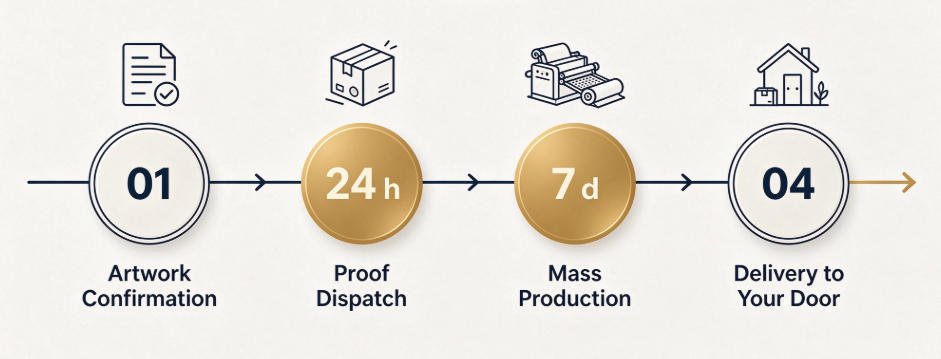
Custom labels are manufactured in China on our own lines and shipped from Shenzhen or Zhuhai ports. The proof and production schedules start from artwork confirmation and deposit. Plan your launch around these two dates.

Custom Label Delivery Timeline
24 hoursProof dispatch

Proof samples created and dispatched within 24 hours of artwork confirmation. See FAQ Q3 for details.

7 daysMass production

Production completed and shipped about 7 working days after deposit and proof approval. See FAQ Q4 for timeline.

50 / 50Payment

Bank transfer against proforma invoice: 50% before production, 50% before dispatch. See FAQ Q7 for details.

ItemSpecification
Minimum order quantityBelow 100 pcs (see FAQ Q1)
Proof24 hours (see FAQ Q3)
Mass production7 working days (see FAQ Q4)
Payment50% before production, 50% before dispatch (see FAQ Q7)
Shipping and packingShipped from Shenzhen or Zhuhai port with batch number and traceability record
DocumentsDispatch inspection report, certificate of conformity, material certificate on request
TraceabilityComplete records kept for all stages

BEFORE YOU ORDER

Frequently Asked Questions

Direct answers on minimum order, lead time, materials, customization, payment and test reports.

1What is the minimum order quantity for custom waterproof labels?

The overall MOQ is below 100 pcs, so you can place a trial order before scaling up. We accommodate small batch runs with the same quality control as large-volume orders.

2How are custom labels designed and engineered?

Custom label design starts with your application requirements. Our engineers specify the face-stock chemistry, adhesive formulation, adhesion profile and durability finish based on your substrate, service conditions and equipment. With OEM and ODM, your label performs correctly from the first batch—no iteration needed.

3How long does a custom label proof take?

We produce custom label proofs on our digital press and dispatch samples within 24 hours of artwork confirmation. You validate the structure, finish and performance before we start mass production.

4What is the production timeline for custom label orders?

Custom label batch printing is scheduled by order quantity. Production is usually completed and shipped in about 7 working days. As a custom label manufacturer in China, we ship from Shenzhen or Zhuhai ports.

5Which face-stocks, adhesives and finishes are available for custom waterproof labels?

Face-stock options: coated paper, matt paper, white cardboard, kraft paper, thermal paper, films (BOPP, PE, PP, PET, PVC, PI, fluoropolymer), synthetic paper, and functional papers (tamper-evident, moisture-sensitive, thermochromic, photochromic, holographic, electrostatic). Finishes: hot foil, cold foil, embossing, varnish, spot UV, lamination and variable data. For a complete reference guide with material selection advice for your application, see the Parameter Reference and Customization Options sections. We can send samples upon request.

6Do you accept custom label orders with specific requirements?

Yes. We have 26 years of custom label manufacturing experience and accept OEM and ODM orders for material, process, size and structure. Send your artwork and requirements, and our engineers will confirm the custom label details and return a specific plan and schedule.

7What are the payment terms for custom label manufacturing?

Payment is by bank transfer against a proforma invoice (PI). 50% is due before custom label production starts, and the balance of 50% is due before dispatch. We also offer flexible payment options for bulk custom label orders.

8What compliance certifications and test reports do you provide for custom labels?

We can provide reports for RoHS, REACH, FDA food contact, flame retardancy (GB 8624), peel adhesion, loop tack, holding power, alcohol resistance, abrasion, and temperature and humidity ageing. Custom waterproof labels are tested for water resistance, UV stability and chemical compatibility. Third-party reports are arranged by your sales manager for each custom label project.

Send Your Artwork and Requirements for a Custom Label Plan

Share the artwork, substrate, service conditions and quantity. Our engineers reply with a structure, process route and schedule.

Request Custom Label Quote
Email
WhatsApp
WhatsApp QR code
WeChat
WeChat QR code
Labellet Manufacturer
Privacy Overview

This website uses cookies so that we can provide you with the best user experience possible. Cookie information is stored in your browser and performs functions such as recognising you when you return to our website and helping our team to understand which sections of the website you find most interesting and useful.