Low MOQs: Digital Proofing from 100 Pieces
Our digital line starts at 100 sheets and gangs 20+ SKUs in one run. Flexo handles volume from 1,000 sheets up. We fit the schedule to your production plan and shelf-life window.
FOOD SAFETY LABELS · COLD CHAIN · HOT FILL · RETAIL SHELF
From a −40 °C quick-freeze line to an 80 °C hot-fill and an oil-soaked sauce. Tell us the filling temperature and the container. We match the face-stock, adhesive and proof date to both.
A food label often fails once it hits the shelf — the underlying cause stems from the printing process. The adhesive may be formulated for a production temperature higher than yours. The face stock may look great, yet not stand up to condensation. Or the ink may interact with grease prematurely.
We validate all three before any proof is produced.
Our digital line starts at 100 sheets and gangs 20+ SKUs in one run. Flexo handles volume from 1,000 sheets up. We fit the schedule to your production plan and shelf-life window.
Ambient, chilled (0–5 °C), frozen (−18 °C) and quick-frozen (−40 °C) each get their own adhesive. The proof approval sheet states the minimum application temperature, nip pressure and dwell time. You sign off on those figures before we run.
Food-contact inks, adhesives and face stocks never share a floor with industrial material. They run in segregated stores, on dedicated machines or in scheduled windows. Every run is logged with washdown records. Prepress, printing, coating, die-cutting, inspection and warehousing all sit in our own plant. One team owns your label from raw material to shipped roll.
BY PRODUCT
Four everyday categories. Each column below is a ready build: stock, glue, print and finish matched to that product.
Pizza packaging has two weak points. Tomato fat seeps into paper and leaves a halo around the ingredient panel. A −18 °C freezer stiffens the face-stock until corners lift. A grease-resistant coating stops the first problem. A freezer-grade bond on synthetic or PE stock stops the second.
Cereal is a moisture magnet, and the failure is rarely the print. It is the label edge in a warm, humid store. BOPP holds its shape where paper creeps. Reverse printing traps the ink between film and adhesive, so moisture never reaches it. The inner-bag label uses a low-tack adhesive, so the sealing jaw does not pull it back.
A bread label lives a short, damp life: 24–72 hours in a warm bakery. Condensation forms underneath, and the shopper reads it once. Uncoated or kraft stock absorbs that moisture instead of fighting it. Without a film layer, it will not curl away from a warm bag.
Butter sits in cold storage. Light and nearby food odours move onto the pack. A laminated or metallised face blocks both, and gives paper the moisture resistance it lacks on its own. On foil-wrapped blocks, the label must grip the foil layer, not the paper under it.
The 4 food label categories above cover the most common requests, but our labels are not limited to them. If you have a different product, send us the details and we reply within 24 hours.
FOOD LABEL SOLUTIONS
Same product, different line, different label. These four line setups decide what we quote: the problem, the build and the step that settles it.
Frozen dumplings, frozen seafood, chilled dairy, ice cream
Below −18 °C a face-stock must not embrittle and edges must not lift. In a chilled cabinet the label also has to live with condensation without the adhesive losing tack.
Soy sauce, chilli sauce, olive oil, fruit vinegar, ketchup
Oil and vinegar sit against the label for months. The face must not swell, the ink must not migrate into the liquid, and the seam must stay shut.
Crisps, biscuits, chocolate, nuts and confectionery
Rich brand colour has to last a long shelf life and take handling in the store without whitening at the print.
Vitamins, minerals, protein powder and dietary supplements
Two regulatory regimes at once, a bilingual ingredient list, a nutrition table and the warning statements, all on a small wrap-around die-cut.
ONE TABLE, FOUR OPTIONS
Each column is one ready build for one product family.
| Item | Option A · Ambient food | Option B · Cold chain and frozen | Option C · Oil, vinegar and liquid | Option D · Premium supplements |
|---|---|---|---|---|
| Typical face-stock | 80–100 g/m² coated paper / matte-coated paper | Pearlised synthetic 50–80 μm / white PE | Clear BOPP 30–50 μm / white BOPP | 80 g/m² coated paper / silver PET |
| Face thickness | 80–100 g/m² | 50–80 μm | 30–50 μm | 80 g/m² + 12 μm lamination |
| Adhesive | General-purpose water-based | Cold-grade high-tack water-based | Oil-resistant high-tack water-based | Permanent water-based, no residue |
| Liner | 60 g glassine | 80 g glassine | 60 g glassine | 80 g glassine, double-sided |
| Print process | 4C + 2–4 spot colours | 4C + spot foil | 4C + spot varnish | 4C + 4 spot + matte gold foil + matte varnish |
| Surface finish | Full matte varnish | Full matte varnish / spot varnish | Film lamination + spot varnish | Full matte varnish, 60° at 5–10 GU |
| Service temperature | −10 to 80 °C | −25 to 60 °C | −10 to 100 °C | −10 to 80 °C |
| Application | Flat / curved | Flat / condensation-facing surface | Wrap-around bottle | Wrap-around bottle / irregular die-cut |
| Minimum order | 1000 pcs | 1000 pcs | 1000 pcs | 1000 pcs (digital pilot from 100 pcs) |
| Standard lead time | 5 / 15 days | 5 / 15 days | 5 / 15 days | 5 / 15 days |
| Regulation | GB 7718 | As Option A | As Option A | EU 1169/2011 + FDA 21 CFR 101 |
SIX DECISIONS, ONE QUOTATION
Answer these six with your engineer. Your quote lands in one round, with no follow-up questions on temperature or stock.
Ambient through frozen, in four bands: −10–80 °C (ambient food), −25–60 °C (cold chain), −10–100 °C (oil and liquid), −10–80 °C (premium supplements). Every cold-chain shipment lists the minimum application temperature, roller pressure and dwell time. Ready to run as printed.
Coated or matte-coated, pearlised synthetic or white PE, clear or white BOPP, coated with lamination. Pick white PE where condensation matters. Pick silver PET where shelf presence matters. Exact gauges follow the comparison table.
Four water-based systems cover dry, freezer, oily and peel-clean packs. Your engineer picks one in Custom 01 temperature band — no second round on glue.
Serial, QR, authentication or traceability code printed inline by digital. Each pack carries its own scan for import checks and single-bottle tracking.
4C plus spot colours, spot foil, spot varnish, or the full premium stack in Option D. We match to Pantone or your swatch; measured numbers are in the test table.
GB 7718, the GB 4806.1 series, EU 1169/2011, FDA 21 CFR 101 and GB 28050 all run as standard. Papers travel with every lot; the full index is under Reports.
MEASURED, NOT PROMISED
Every number below comes from a test on the shipped build. Peel, colour, register and code checked after ageing. Not copied from a raw-material sheet.
| Property | Test standard / method | Labellet typical value | Industry reference |
|---|---|---|---|
| Ink adhesion | 3M 810 tape, 180° peel | Grade ≥ 4, no shedding | Grade ≥ 3 |
| Abrasion resistance | Friction test, 500 g load, 50 rubs | No visible whitening on the matte varnish | 20 rubs |
| Low-temperature resistance | −25 °C storage, 72 h | No opening, no edge lift | −18 °C, 48 h |
| Heat resistance | 80 °C hot water, 30 min | No ink bleed, no delamination | 60 °C, 20 min |
| Oil resistance | Cooking oil immersion, 24 h | No ink migration | 12 h |
| Colour difference ΔE | Spectrodensitometer | ΔE ≤ 2.0 for spot colours | ΔE ≤ 5.0 |
| Print-to-die registration | 20× loupe | ≤ 0.2 mm | ≤ 0.3 mm |
| Initial tack | FINAT rolling-ball method | ≥ 8 steel ball number | ≥ 6 steel ball number |
| Holding power | 80 °C, 1 kg load | ≥ 24 h | ≥ 12 h |
| Cold-line peel retention | −25 °C application, 180° peel | ≥ 85% retention | ≥ 70% |
| Variable code legibility after cold ageing | −25 °C / 72 h, re-verified to ISO/IEC 15415 | Still grades C/4/660 | C/3/660 |
| Food-contact compliance | EU 1935/2004, FDA 21 CFR | Pass, SGS report supplied | Ambient rating only |
Need the lab report behind one line item? Email sale@labellet.com with the food type, the labelling temperature and the container material. We reply within 24 hours.
WHY LABELLET FOR FOOD
26 years behind every roll. Equipment, team and capacity on standby for you.
Gift packs, limited runs and market pilots get foil and die-cut with no plates and no flexo setup. Pilot lots run first, flexo follows for volume.
Chinese, English, French, German, Spanish, Arabic, Japanese, Korean, Russian, Vietnamese and Thai. For regulated markets we work with your local translation partner. Line breaks are checked against the die-cut.
Serials, QR and authentication codes print inline and check against the packing list before cartons seal.
Face-stock, ink, adhesive and liner each carry a batch certificate. Lots ship with their papers — index under Reports.
SUCCESS STORIES
Two supplement wraps and one oil-rich condiment label. Each shipped with the test report and the trial sample behind it.
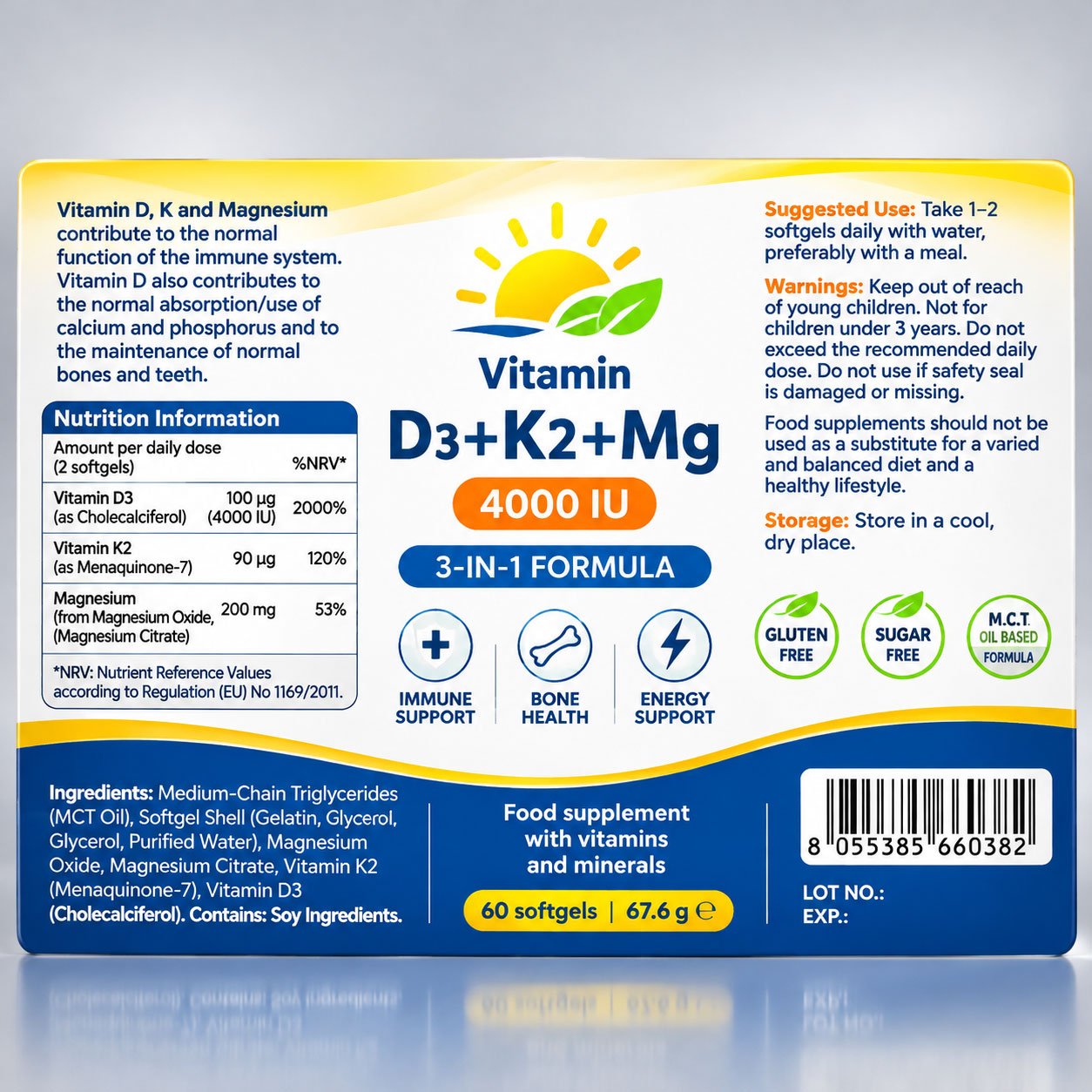
European supplement brand · wrap-around bottle label
What we finally produced:
Final delivery: Illustrator (AI) source file + print-ready PDF + die line + bottle trial sample + SGS report.
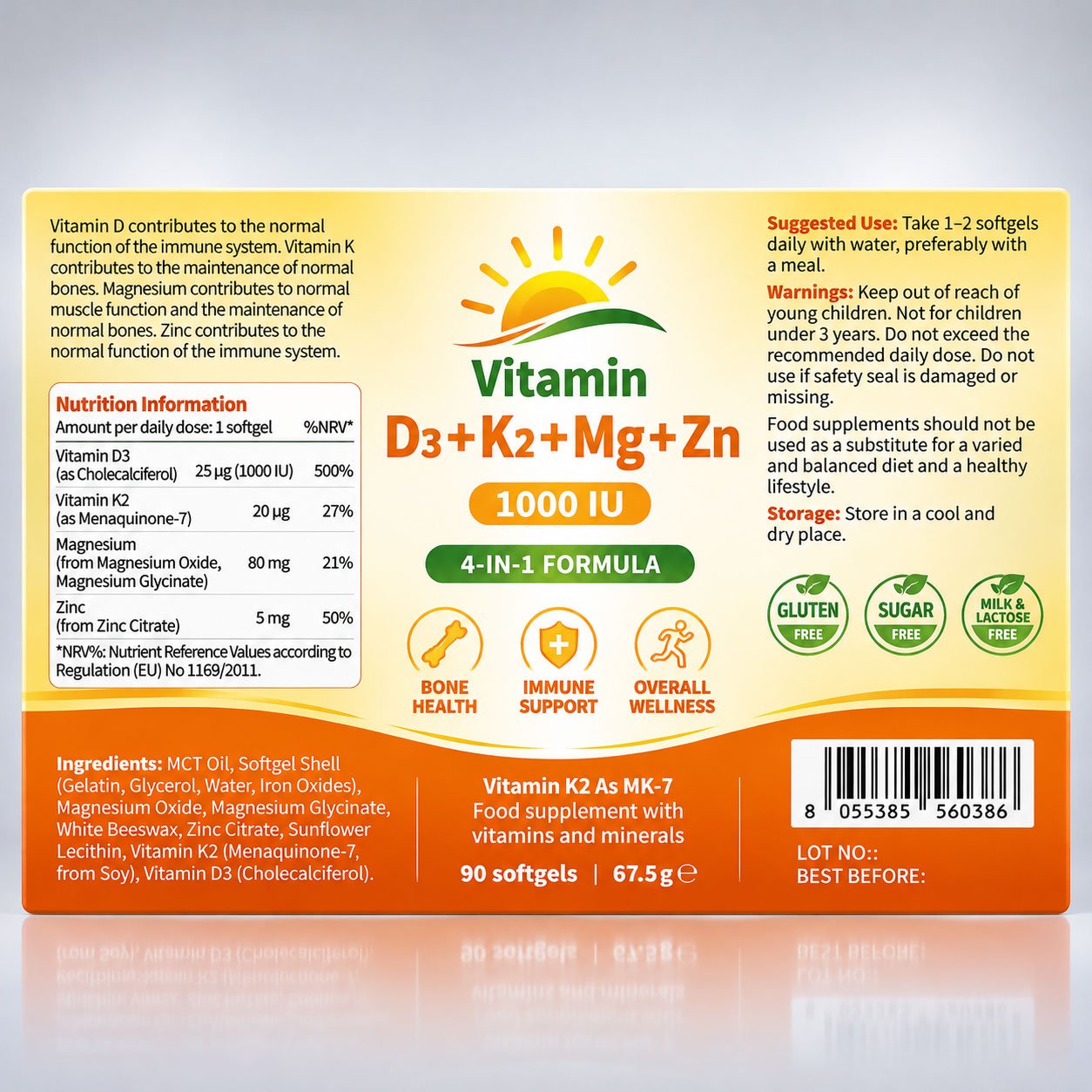
Paediatric supplement · multi-SKU, short runs
What we finally produced:
Final delivery: Same file pack as Case 1, plus packing proof and colour proof sheet.

North American food brand · glass bottle, oil-rich product
What we finally produced:
Final delivery: Artwork + die line + bottle trial sample + oil immersion test report.
ON THE FILE, NOT ON THE BROCHURE
BEFORE YOU ORDER
Practical answers for buyers, category managers and packaging engineers.
Flexo from 1000 pieces. Digital pilot from 100 with no plate cost — good for market tests and gift packs. Foil and die-cut scope under Digital line above.
Freezer-grade bond in Option B, qualified to −25 °C. The proof ships with press settings for your line — no trial runs on your side.
Standard builds proof in 5 days and ship in 15. Share the launch date and we fit the press slot to it.
Yes, matched to your build. See Reports for the index — each lot leaves the plant with its own papers.
Product type, labelling temperature, container material and quantity. We return the construction, the proof date and the price.